Understanding Congressional Censure: What It Is, How It Works, and Why It Has Become So Political
When Congress announces that a member has been censured, it often makes headlines but the public conversation usually stops at the shock factor. Few people fully understand what a censure actually is, why it matters, and how it fits into the broader landscape of congressional discipline.
11/21/20253 min read
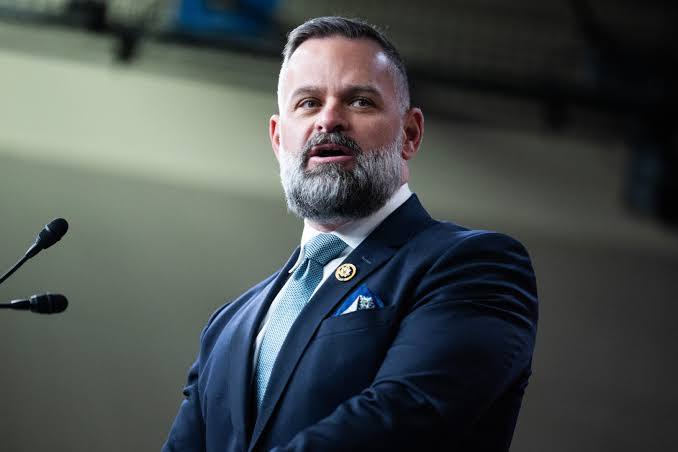
This week a resolution proposing the censure of Rep. Cory Mills, H.Res. 889 (2025) ,was entered into congress. this brings this rarely explained process back into public view. Examining it, alongside earlier cases, helps us understand how censures function and why they have taken on such a political tone in modern times.
What Is a Censure?
A censure is a formal statement of disapproval issued by either the House or Senate against one of its own members. It is authorized directly by Article I, Section 5 of the U.S. Constitution, which gives each chamber the power to discipline its members for “disorderly behaviour.”A censure does not remove a member from office. Instead:
The member must stand in the well of the chamber.
The resolution is publicly read aloud.
The member’s name becomes permanently associated with the action.
Committee roles may be stripped, depending on the chamber’s rules.
It is one of the strongest punishments available short of expulsion.
Why Censure Resolutions Name Specific Individuals
Censure resolutions are often surprising to people because they read more like detailed case files than traditional legislation. Unlike ordinary bills that create or amend laws, censure resolutions:
Name a specific member
State factual allegations or findings
Argue how the member’s conduct “discredits” the institution
Conclude with a disciplinary action
This makes the language feel personal, but that is unavoidable. Congress cannot discipline “the office” or “the position” only the person who allegedly violated conduct standards.
A censure is not legislation. It is an internal disciplinary tool, and therefore exempt from constitutional bans on “bills of attainder” (laws targeting specific individuals for punishment).
Why Censures Often Sound Political
In theory, a censure is about conduct. In practice, censures frequently take place against the backdrop of intense partisan pressure. Because a censure requires only a simple majority vote, whichever party controls a chamber often has the ability to:
Decide which cases move forward
Time the introduction of the resolution
Shape how accusations are framed
Determine whether consequences like committee removal are added
This does not necessarily mean allegations are false. It does mean the process almost always exists inside a political reality. Especially in today’s polarized environment.
A Modern Example: H.Res. 889 (2025)
The 2025 resolution to censure Representative Cory Mills demonstrates the contemporary pattern. The resolution:
Catalogs allegations of domestic violence
Highlights legal findings from police and court records
Cites a dating-violence injunction
Points to possible financial reporting violations
Questions the legitimacy of a Bronze Star award
It is thorough, detailed, and pointed in an almost prosecutorial in style. This has become the norm. Modern censures often contain extensive personal history because they must justify why a member’s actions “discredit the House.” But the timing, the choice to pursue a censure rather than a lesser measure, and the intensity of the language often reflect political considerations as much as ethical ones. This is not unique to one party. The censures of Paul Gosar (2021) and Adam Schiff (2023) were also widely viewed as both ethical responses and political statements, depending on who you ask.
A Historical Contrast: Sen. Joseph McCarthy (1954)
To understand how censures have evolved, it helps to look at older, bipartisan examples.
The Senate’s 1954 censure of Senator Joseph McCarthy for abuse of committees, mistreatment of witnesses, and conduct “contrary to senatorial traditions” was:
Supported by members of both parties
Focused on institutional norms rather than private personal behavior
Framed in measured, formal language
Motivated by concerns about the Senate’s integrity rather than partisan retaliation
Earlier censures, going back to the 1800s, tended to be:
Rare
Based on clear misconduct
Less entangled with partisan strategy
Often supported by broad majorities
In short, censures historically were used sparingly and primarily for clear institutional breaches such as bribery, disorderly behavior, corruption, not for politically charged confrontations.
How Censure Became More Political Over Time
Several forces contributed to the shift. As Congress has become more ideologically polarized, disciplinary actions have become tools for signaling party values and taking public stands. Censures now create national narratives, social media cycles, and fundraising opportunities. This raises the political stakes on both sides. Historic censures relied on shared expectations of behavior. Those shared norms have weakened, leading each party to view discipline through a political lens. Modern censures have sometimes followed a tit-for-tat pattern. One party censures a member, the other responds when they regain control.
The Public Should Know that Censure is both a real tool for holding members accountable,
and a political instrument shaped by the dynamics of the moment. The public should take censures seriously, but also understand:
The allegations may be grounded in genuine misconduct.
The decision to advance the resolution may be influenced by political strategy.
The language of the resolution will almost always feel intensely personal.
Modern censures exist at the intersection of ethics, accountability, and partisanship.


Sign Up for Text Updates
Get text messages sent directly to your phone to stay up-to-date on the Fellowship's life-saving work around the world.


Subscribe to our Newsletter
Stay informed about issues affecting Africa, the African descendant nation, and Africa American relations, receive Daily Devotional and more
Who We Are
Who We Help
Latest News
Learn
Act
Ways to Give
Also of interest
@ 2025 International Fellowship of Black Americans and Africans ®
1705 East Joppa Rd
Parkville MD 21234
info@ifbaa.com
1-855-984-3222
A 501(c)(3) tax-exempt, non-profit organization.
The Fellowship's tax identification number is 39-4751944
Privacy Policy |